3.2
Diabetes Mellitus
Diabetes Mellitus is a metabolic disease in which the blood sugar level is high during a long period. The body cannot control sugar absorption because pancreas does not secrete enough insulin and the result is a higher concentration of glucose in the blood. The body does not produce enough insulin (a hormone that controls the level of sugar in blood).
There are three main types of diabetes mellitus:
- Type 1 appears in childhood or early teen age. Complete lack of insulin is typical for this type. The patient is dependent on insulin treatment, which can be applied using an insulin pen or insulin pump.
- Type 2 affects people over eighteen, often obese people. Insulin is produced but the diseased cells do not accept it. This type of diabetes mellitus is associated with lifestyle, it is considered to be a disease of modern civilization. The treatment is to supply insulin, to control blood sugar level, to follow the diet.
- Other types of diabetes mellitus. These include cases where the cause is known. They are mostly resulted from the use of medications (corticosteroids) when the pancreas is damaged. We can include the genetically conditioned diabetes which is most common in children and adolescents.
This group also includes diabetes which occurs during pregnancy. It is also known as pregnancy gestational diabetes. It occurs due to hormonal changes.
It is important to measure the level of sugar, which is called glycemia and measured by a glucometer. Glucose can be also measured by using glucose-sensing device called a "sensor" which is applied under the skin. (In the video bellow you will see application of the sensor.) The sensor measures the level of sugar in blood every five minutes and reports the levels to the mobile phone. If the level is not within the limit, the phone starts ringing. The sensor is not only waterproof but also resistant to everything. The person who has this sensor has to enter the values such as food, insulin and movement. The sensor is changed every six to ten days.
Normal level of glycemia is 4 – 6 mmol/l. There are two types of ubnormal glycemia:
-hypoglycemia - sugar level of 3.9 mmol/l or less
-hyperglycemia - sugar level of 6 mmol/l or higher
If the patient is not treated there is a risk of eye deterioration, neurological disability, kidney damage, heart failure, blood vessels disorders etc.
3.2.1
Application of insulin
There are different ways to apply insulin.
A disposable pen: this contains a prefilled insulin cartridge. Once used, the entire pen unit is thrown away. (See picture 1)
A reusable pen: this contains a replaceable insulin cartridge. Once empty, the cartridge is discarded and a new one put in. (See picture 2)
A new disposable needle must be used every time insulin is injected. (See picture 3)
+

Fig. 4. A disposible pen
+
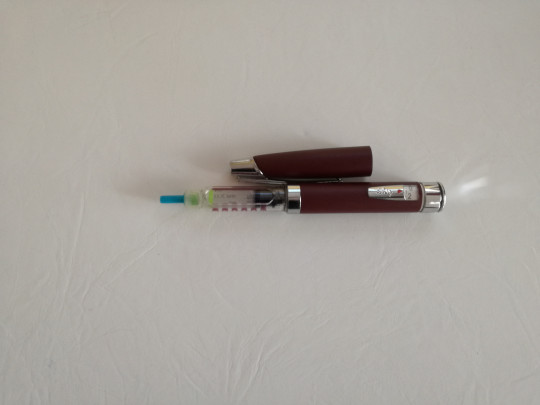
Fig. 5. A reusable pen
+
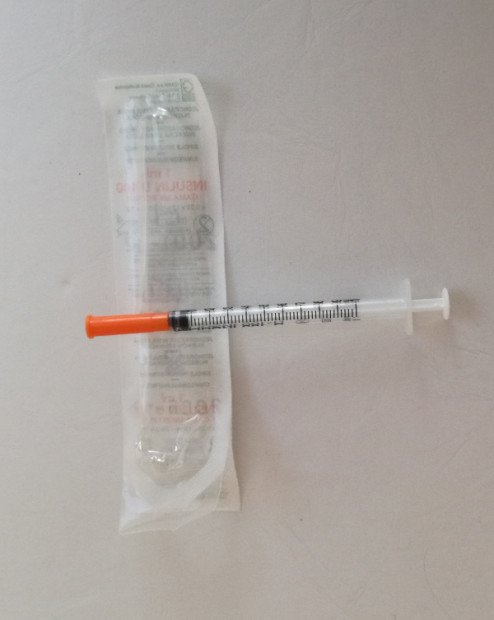
Fig. 6. A disposable needle
+
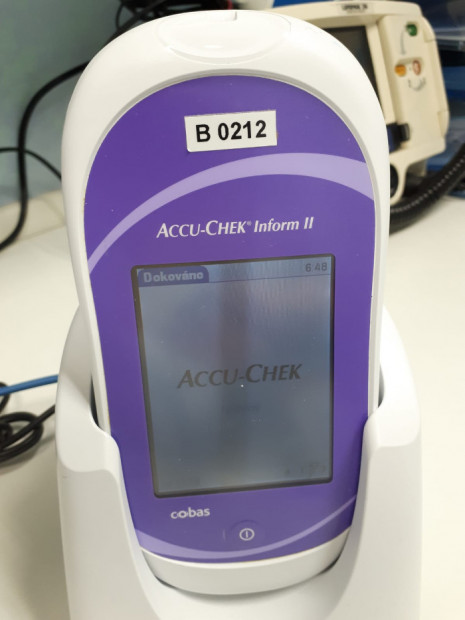
Fig. 7. Central glucometer in hospital
+
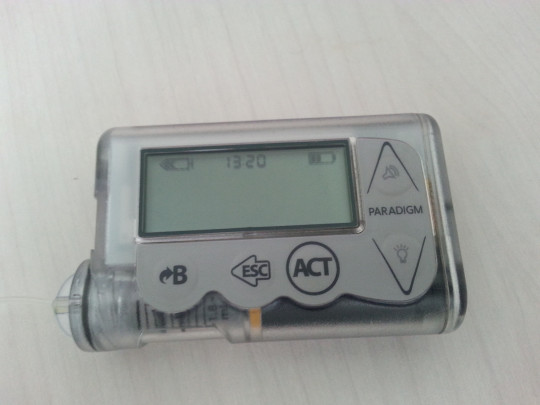
Fig. 8. Insulin pump
In this video you can see application of sensor
Choose the right possibility