1.4
Diseases of oral mucosa
The oral mucosa is the lining of the oral cavity. It is a mucous membrane composed of connective tissue covered with epithelium. It covers the gingiva and the hard palate (masticatory mucosa), also the inner surfaces of the lips and cheeks, the floor of the mouth, the lower side of the tongue, the soft palate (lining mucosa), and upper side of tongue (specialized mucosa).
1.4.1
Herpes simplex virus infection
Primary infection usually occurs in children but it can occur at any age. Antibodies are produced but do not guarantee immunity to herpes or to other herpesvirus infections.
Primary herpetic gingivostomatitis
The beginning of infection can be asymptomatic. Later gingivostomatitis and pharyngitis are the most frequent manifestations, with fever, andinability to eat. Painful oral vesicular lesions may occur on gingiva, mucosa, tongue and lips.
Herpes labialis
Cold sore is oral facial infection. It is usually triggered by stress, sunlight, illness, or trauma. Before the lesion appears, there may be burning sensations with slight swelling as a forewarning. Recurrent lesion is usually at border of the lip. We can see ruptures, crusting follows. Healing takes up to 10 days.
Dental hygienist should explain to the patient that he/ she is contagious with possible transmission to other patient. Irritation to the lesions can prolong the treatment and severity of the infection. DH can ask the patient to call ahead to change appointment in case of herpetic lesion.
1.4.2
Aphthous ulcers
Aphthous stomatitis has been classified as a type of non-infectious stomatitis (inflammation of the mouth). It is classified according to the size, number and location of the lesions, the healing time and whether a scar is left after healing.
+
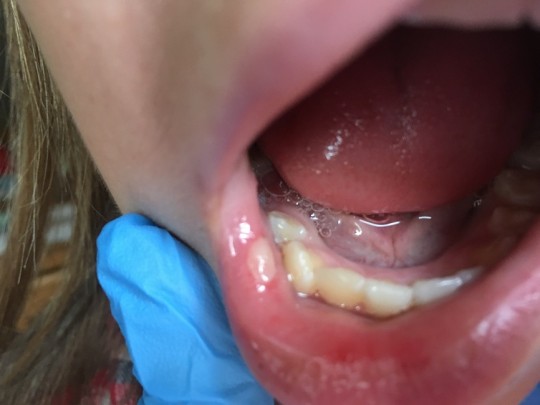
Fig. 11. Aphthous ulcer
The cause is not clear. Groups of patients are triggered by variety of factors. They can be nutritional deficiencies, local trauma, stress, hormonal influences, allergies, or genetic predisposition. The ulcers occur periodically. It usually lasts 7 – 10 days till complete healing. Ulcers occur 3 – 6 times per year usually in the mouth. The thickness of the mucosa may be an important factor in aphthous stomatitis. This disease is rare in people who smoke. Tobacco use is associated with an increase in keratinization of the oral mucosa. It may manifest as leukoplakia (or stomatitis nicotina, is a reaction to an irritant, like rough teeth, badly fitting dentures, smoking. White patches are usually painless, and can´t be scraped off).
+
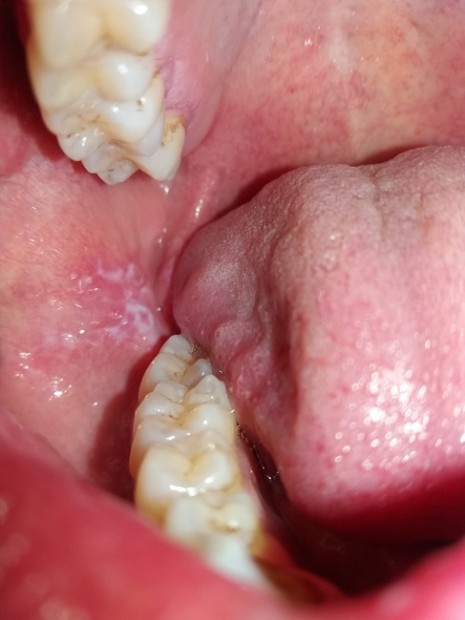
Fig. 12. Leukoplakia
The aphths don´t require any specific therapy. The pain is often tolerable. Medicaments are only aiming to relieve the pain, and promote healing. Modification of a diet should help healing this ulceration. The patient should avoid sweet, spicy and acidic foods and drinks.
+

Fig. 13. Liquid for healing aphthous ulcer
1.4.3
Geographic tongue
The parts of a tongue miss small bumps, then raised and lowered spots appeared. When the spots change location, pattern, and size within minutes or hours, we talk about geographic tongue. It is usually painless and appears randomly. It doesn´t need any treatment. Proper brushing of tongue and anti-inflammatory medicaments can help.
It is a condition characterized by an area of redness and loss of lingual papillae on the central dorsum of the tongue. Predisposing factors are smoking, denture wearing, using inhalers and HIV infection. It is usually a kind of chronic atrophic oral candidiasis. Treatment may involve prescription of topical or systemic antifungal medication.
+
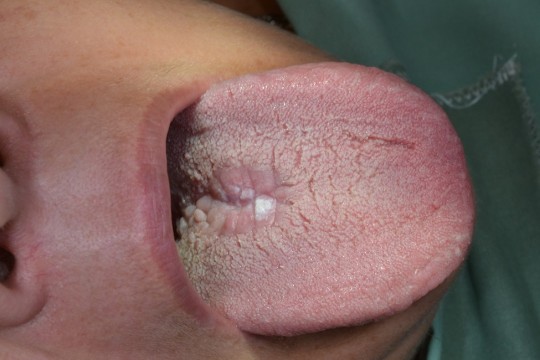
Fig. 14. Median rhomboid glossitis
©
For licensing reasons, this interactive object cannot be directly incorporated into the material. Click HERE to see the object.
Interactive object 4. Language game (the user will be directed to an external page)