1.3
Tooth
Summary
The human dentition is composed of two sets of teeth. They are organised in two opposing arches, maxillary (upper), and mandibular (lower). Teeth are embedded in alveolar socket of a jaw-bone and connected with periodontal ligament.
1.3.1
Structure of tooth
The tooth can be divided into two parts. The upper part and lower one. The crown of the tooth, visible part, is above the gum and the part, which is not visible is called the root. The part between the crown and the root is called the neck.
Anatomically, we can find several structures, which make up the tooth.
The enamel covers the tooth and it is the hardest substance of the human body. It has a high mineral content. It protects the internal vital tissues from destruction, and provide thermal insulation for a tooth. It has no nerve endings, it isn´t sensitive. On the other hand, it is susceptible to caries, and to tooth wear.
The cementum is a softer tissue than dentine. It covers the dentine of the root. It is light yellow, slightly lighter in colour than dentine. It has the highest fluoride content of all mineralized tissue. There can occur root resorption because of wrong brushing technique, the incidence of cement caries increases in older adults due to gingival decline from periodontal illnesses.
The dentine is usually covered by enamel on the crown and cementum on the root and surrounds the pulp. It resembles bone in structure but it is much harder. The colour is yellow, and it affects the colour of a tooth due to translucency of enamel. Dentine forms throughout the life and it is sensitive.
The pulp cavity is the space within a tooth root, filled with the living connective tissue. The primary function is to form the dentine. Then it supplies the surrounding tissue with moisture and nutrients. In this part we feel pain in case of extremes temperature, pressure, or trauma. Blood vessels and nerves enter the dental pulp through the apex, which is the end of the root. This is also the place where the pulp infection may enter the alveolus and surrounding soft tissues.
The periodontal ligament covers the root and lines of the alveolus, and holds the tooth firmly in its socket.
The gingiva is the pink gum around the neck of the tooth. Between the neck and gum there is gingival sulcus. The normal depth is about 0, 5 – 2 mm.
+
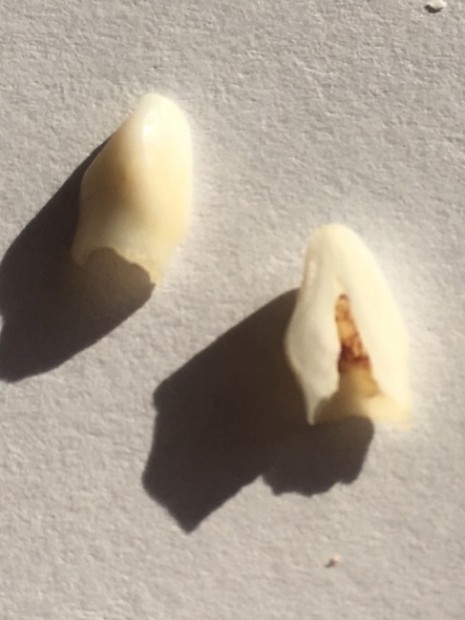
Fig. 4. Tooth
1.3.2
Types of teeth
There are four main types of teeth: incisors, canines, premolars (only in permanent dentition) and molars.
Incisors
They are the front teeth. There are 8 incisors in primary and in secondary sets of teeth, 4 maxillar and 4 mandibular. They have straight edges that are designed to incise in to food. They are at the risk of damage, due to their unprotected position.
Canines
We find 4 canines in both dentitions, 2 maxillar and 2 mandibular. They are located at corners of the mouth. They have a sharp, triangular shaped projection. Their function is to pierce, tearing, grasping, and holding food. They have long stable roots and they are able to bear greater forces than incisors. The roots also play important role in shaping the balanced, aesthetic appearance of the face.
There is quite common problem with canines. We can see teenagers with unerupted canines. It happens in case the total width of the teeth exceeds the available width of the arch for the teeth to erupt in to.
+
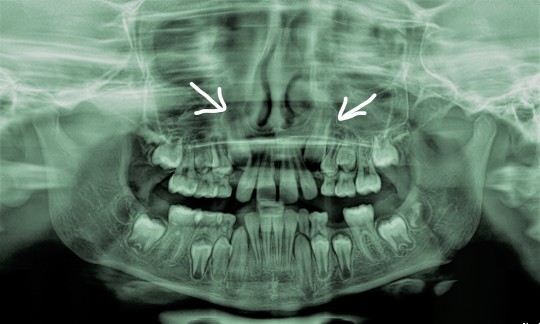
Fig. 5. X-ray photo of unerupted canines
Premolars
The permanent dentition has 8 premolars. They are between the canines and the molars, and they share similar characteristics. Generally, they have 2 cusps. In case of dental crowding, they are usually extracted.
Molars
There are 12 molars in the permanent dentition, 6 maxillar and 6 mandibular. They are located at the back of the mouth. Last molars are called wisdom teeth and usually erupt later than the other molars. The number of cusps varies between 3 and 5. The molars (and premolars as well) have fissures and these areas are prone to dental decay, because they trap food and bacteria. They are designed to crush and chew food.
©
For licensing reasons, this interactive object cannot be directly incorporated into the material. Click HERE to see the object.
Interactive object 2. Write (the user will be directed to an external page)
1.3.3
Milk set of teeth
Summary
Good strong teeth start with a balanced diet for a baby during prenatal life. This development starts during the seventh intrauterine week. Three months after conception, these cells mineralized with the help of calcium circulating in the mother´s blood. By the time the baby is born it will already have milk teeth developed under the gum.
Most babies begin to teethe between 4 – 7 months of age. The first baby tooth, which is breaking through the mucous membrane, is generally the lower incisor, followed by corresponding the upper incisor. The others erupted teeth are lateral incisor, first molar, canine, and finally second molar in 2 years of age.
1.3.3.1
Symptoms of teething
Some babies get through teething with no signs, but sometimes teething can be very painful. The most likely signs of teething include irritability, swollen and sensitive gums, gnawing or chewing behaviour, refusing to eat, problems with sleeping, temperature can slightly rise. Something cold in babies´ mouth can help. Cold pacifier, clean wet cloth, or refrigerated teething toy or ring, cold sips of water, or giving cold food (yogurt). Parents can massage babies´ gums before each feeding to avoid biting nipple while nursing. A small dose of children´s pain reliever may help them. You can buy some product form over-the-counter teething gel, but be aware of medicinal substances of these products, if they are suitable for such these small children.
+
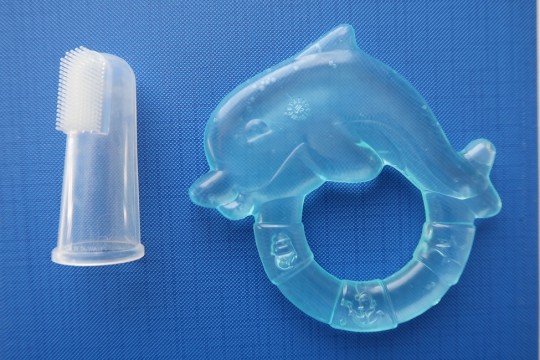
Fig. 6. Teether

Video 1. Baby teething (the user will be directed to an external page)
The function of baby teeth is as follows: the milk teeth help to chew, hold the place for the second set of teeth, and talk.
The babies´ jaws are just big enough to accommodate the deciduous dentition with 20 milk teeth. There are 4 incisors, 2 canines, and 4 molars. These teeth are smaller than the 32 permanent teeth which replace them later.
Primary teeth chart
upper right | upper left | ||||||||
55 | 54 | 53 | 52 | 51 | 61 | 62 | 63 | 64 | 65 |
85 | 84 | 83 | 82 | 81 | 71 | 72 | 73 | 74 | 75 |
lower right | lower left | ||||||||
The mouth is divided into four quadrants, each quadrant is numbered 5 to 8, with number 5 on maxillary right, number 6 on the maxillary left, number 7 on the mandibular left and 8 on the mandibular right. Each tooth in quadrant is numbered 1 through 8 from the central incisor.
+
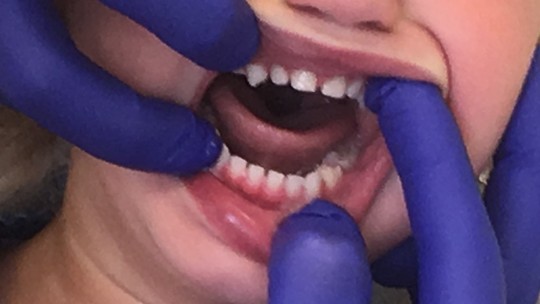
Fig. 7. Milk set of teeth
1.3.4
Mixed dentition
When a child is about 6 – 7 years old the whole process repeats itself. The central incisors fall out first. The milk set of teeth is replaced by the permanent ones. It occurs between 6 and 12 years of age. The permanent premolars erupt behind the primary molars. The jaw lengthens to make room for the permanent molars.
1.3.4.1
Tooth fairies
Teething rituals date back to ancient times. Many cultures developed their unique celebration of the transition from a small child to an elderly one. The most common is the exchange of milk tooth for a small gift or money. There is the tooth fairy legend which is believed to have originated in the United States in the early years of the 1900s. We can find this fairy, who brings small toy, ticket to the zoo, new toothbrush, silver necklace, etc., in many countries, e. g. Zahnfee in Germany, Tannfe in Norway, or Zoubková víla in the Czech Republic. Another variation are possible. In France, Venezuela, and Mexico the small mouse, el Ratón, is known. Parents “cooperate” with these creatures and write letters to their children about the importance of brushing teeth, and dental care routines. They can use printable tooth fairy receipts which are available online, or design their own letters changing their handwriting and using glitter for fairy dust to make it more authentic. At the market you can find recommendations, guides, printed messages, but also objects to the preservation of milk teeth that parents help children cope with any stress from falling out tooth.
+
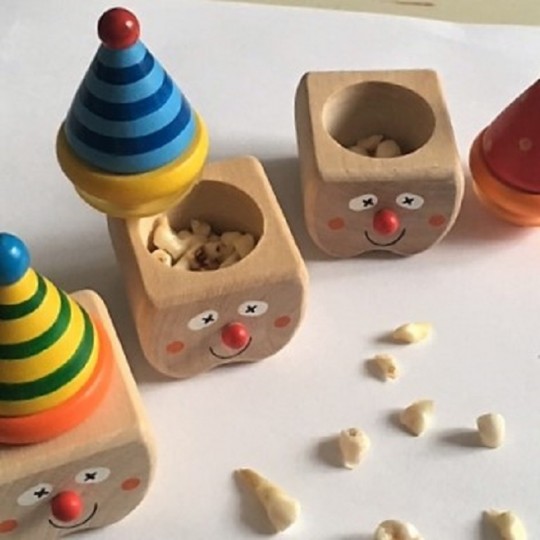
Fig. 8. Wooden tooth box
Sometimes some problems can occur. Common problem is a gap between the incisors. This gap is usually closed when the permanent canines erupt. Sometimes a permanent tooth erupts before the milk tooth has fallen out. The tooth usually falls out later, or a dentist extracts it.
+
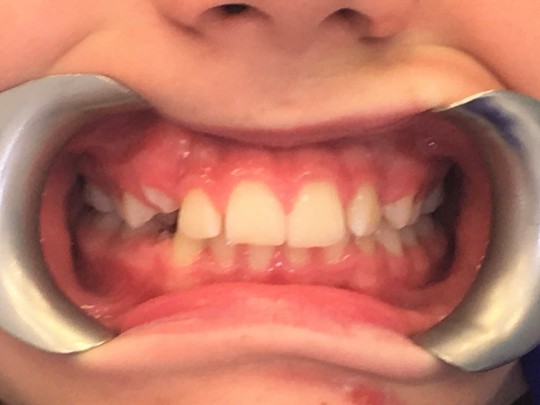
Fig. 9. Mixed dentition
1.3.5
Permanent set of teeth
Most children by the time around 13 years of age have already 28 permanent teeth erupted. In each jaw we can find 4 incisors, 2 canines, 4 premolars and 6 molars. The last molars are the third molars, called also wisdom teeth, begin to appear between 17 and 21 years. Adult people need permanent teeth whole their life, so it is very important to maintain them and prevent tooth decay developing and damaging them. The techniques are brushing, flossing and attending regular dental check-ups.
Permanent teeth chart
upper right | upper left | ||||||||||||||
18 | 17 | 16 | 15 | 14 | 13 | 12 | 11 | 21 | 22 | 23 | 24 | 25 | 26 | 27 | 28 |
48 | 47 | 46 | 45 | 44 | 43 | 42 | 41 | 31 | 32 | 33 | 34 | 35 | 36 | 37 | 38 |
lower right | lower left | ||||||||||||||
The mouth is divided into four quadrants. Quadrant code is numbered from 1 to 4, with number 1 on maxillary right, number 2 on the maxillary left, number 3 on the mandibular left and 4 on the mandibular right. Tooth code is numbered from 1 through 8 from the central incisor.
+

Fig. 10. Permanent set of teeth
Vocabulary
English | Czech | English | Czech |
arch | alveolární oblouk | embedded | vložený |
maxillar | týkající se horní čelisti | mandibular | týkající se dolní čelisti |
socket | zubní lůžko | jaw | čelist |
periodontal ligament | periodontální závěsný vaz | crown | korunka |
neck | krček | vestibule | ústní předsíň |
root | kořen | enamel | sklovina |
substance | látka | susceptible | citlivý |
caries | kaz | tooth wear | opotřebení zubu |
insulation | izolace | resorption | mizení |
translucency | průsvitnost | pulp | dřeň |
apex | hrot kořene | dentine | zubovina |
incisor | řezák | canine | špičák |
premolar | třenový zub | molar | stolička |
edge | okraj, hrana | incise | říznout |
pierce | prorazit | stable | pevný |
exceed | přesahovat | cusp | hrbolek |
crush | rozdrtit | deciduous | dětský, dočasný |
pacifier | dudlík | irritability | dráždivost |
grasp | uchopit | tear | trhat |
swollen | oteklý | gnawing | okusovat, ohlodávat |
©
For licensing reasons, this interactive object cannot be directly incorporated into the material. Click HERE to see the object.
Interactive object 3. Match the words (the user will be directed to an external page)
©
For licensing reasons, this interactive object cannot be directly incorporated into the material. Click HERE to see the object.
Interactive object 4. Match corresponding items (the user will be directed to an external page)