2.2
History of pharmacies
The oldest known prescriptions were recorded on a clay tablet in Mesopotamia approximately 2400 BC. This Sumerian document describes methods for making salves, poultices and washes. The ingredients, used to be dissolved in milk, wine or beer and included myrrh, mustard or bizarre components such as bat droppings, turtle shell powder and snakeskins.
In Ancient Greece, properties of plants were studied in 4th century B.C. Pedanius Dioscorides was one the famous pharmacists as he wrote a five volume book called De Materia Medica, which included description of various medical substances.
+
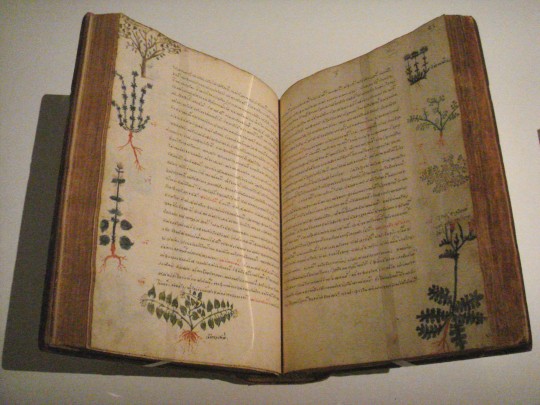
Source: Author PHGCOM, Dioscorides De Materia Medica Byzantium 15th century, license Public domain.
Fig. 10. De Materia Medica
The beginnings of pharmacy in China and Japan date back to the 1st century A.D.
Galen practiced pharmacy in Rome 200 A.D. His principles of compounding and preparing medicines were used for another 1500 years. He developed the formula for cold cream and many procedures Galen formed the base for today´s modern compounding techniques. Avicenna, the “Persian Galen” was a pharmacy giant whose teachings were accepted in the western world until 17th century.
During the Middle Ages, pharmacy and medicine were linked to monasteries. Monks gathered herbs, and prepared medicines for the benefit of the sick and injured. In Europe, the oldest pharmacies are said to be in Croatia inside the Franciscan monastery in Dubrovnik and Florence in Italy. They date back to the 13th century.
+
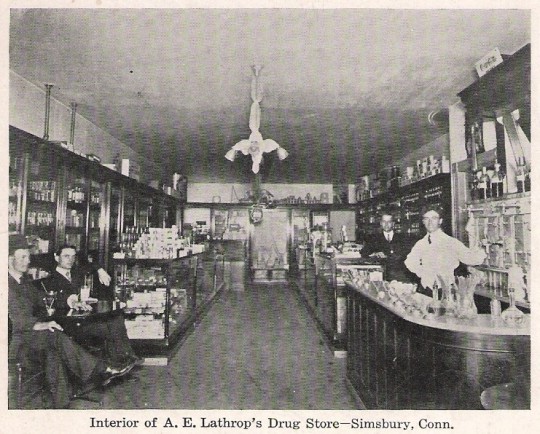
Source: Author Not known, Typical American drug store with a soda fountain, about 1905, license Public domain.
Fig. 11. Old American Drugstore