Chapter5
Countable vs Uncountable Nouns
5.1
Countable vs Uncountable Nouns
Countable nouns - examples:
- I have two cats.
- Michael has three bikes.
Uncountable nouns - examples:
- Mike drinks a lot of coffee.
- Andrea gives great advice.
- Rafael enjoys politics. (Ends with an "s" but is uncountable).
5.1.1
Some of the most problematic uncountable nouns:
- Luggage
- Money
- Food
- Information
- Advice
- Education
- Democracy
+
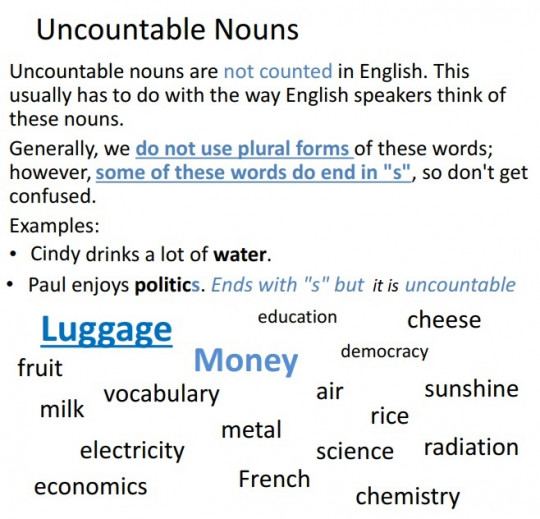
Fig. 10. Uncountable nouns in English.
Note
Do not quantify these uncountable nouns by adding indefinite articles a/an: a/an = “one”(a luggage, an information – this is incorrect!)
Note
Do not create plural form (luggages, informations – this is incorrect!)
Interesting
However, a definite article (the) can be used (the luggage, the information).
The correct forms are, for example, information, some information, any information, or the information.
Some nouns can be countable or uncountable, depending on the context. Example: light vs a light
+
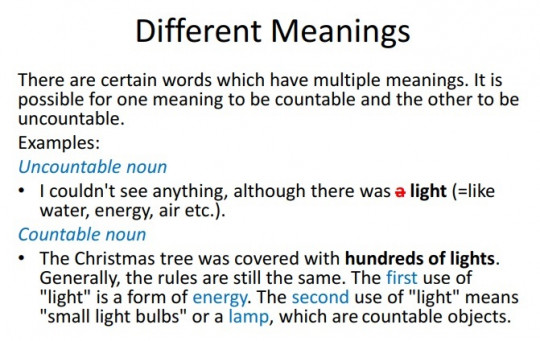
Fig. 11. Nouns that can be countable or uncountable based on the context.
+

Fig. 12. Information, research – uncountable nouns.
+

Fig. 13. Advice, information – sample sentences.
+

Fig. 14. Homework – uncountable noun.
+
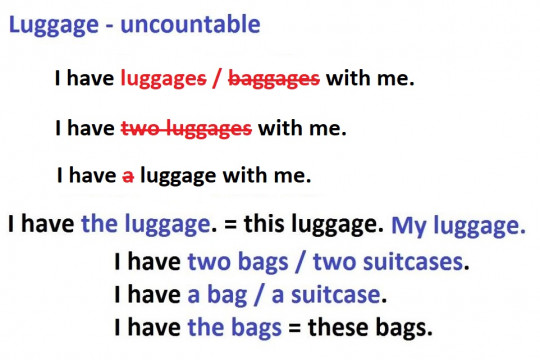
Fig. 15. Luggage – uncountable noun.
5.1.2
Person, Persons, People
‘People’ is plural of a person - singular, persons – plural, only in some cases. Although ‘people’ refers to a number of human beings who are countable (two, three, fifty people), the word people is PLURAL; it can be counted – two people, three people. It is a pity you cannot say ‘one people.’ It can be counted but it acts as a COLLECTIVE noun that acts as UNCOUNTABLE.
- Peoples – prehistoric tribes and cultures, for example the ancient Aztecs.
- People’s Republic of China – it is an English possessive form: whose – of the Republic of China.
Persons (plural) is a very formal word, in modern English replaced by people. We only use it in rather legalistic, very formal contexts (e.g. law, medicine, official scientific reports):
- Any person or persons found in possession of illegal substances will be prosecuted.
- The group of patients included three persons with leukaemia.
- Two persons were successfully cured.
To refer to groups of human beings or humans in general, we use ‘people’:
- I saw three people standing on the corner.
Persons can refer to groups that are easily counted:
- There are four persons on the balcony.
- There are seven persons in this tiny car – the emphasis is on this number, yes, there are really seven, SEVEN persons (physically).
+
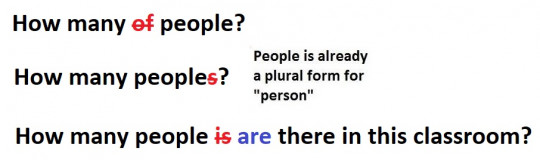
Fig. 16. People – uncountable (!) noun – plural of “person” in modern English.
+
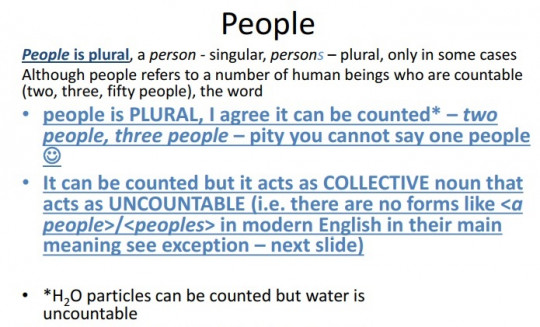
Fig. 17. Collective character of “people.”
+
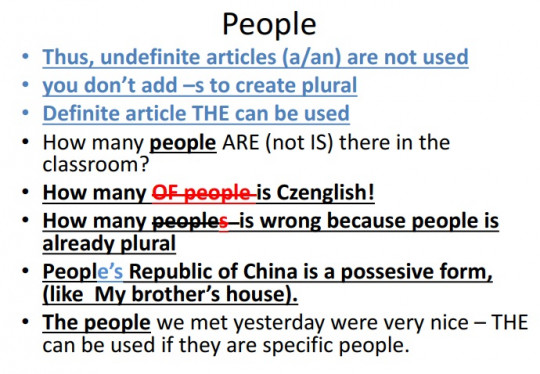
Fig. 18. People – articles.
+

Fig. 19. The word “a people / peoples.”
+
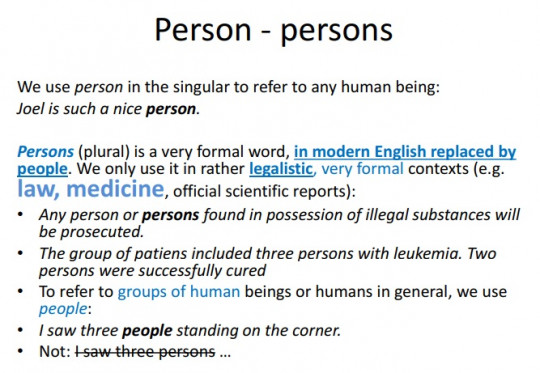
Fig. 20. Persons vs people.
+
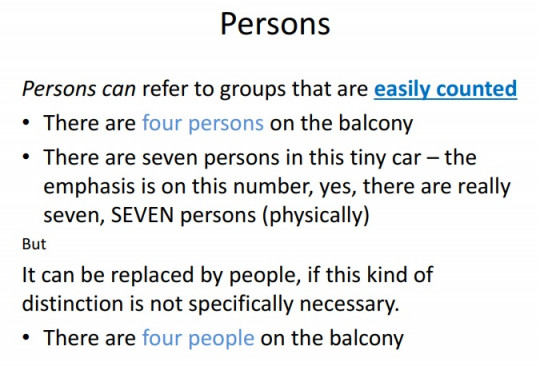
Fig. 21. Emphasis on the exact count in “persons.”